
Closed-Cell Spray Foam in Arcadia, CA
Closed-cell spray foam delivers high R-value per inch and strong air sealing—useful for roof decks, rim joists, and assemblies where space is limited and performance expectations are high.
Common searches: closed-cell spray foam arcadia ca, insulation contractor near arcadia, reduce electric bill arcadia
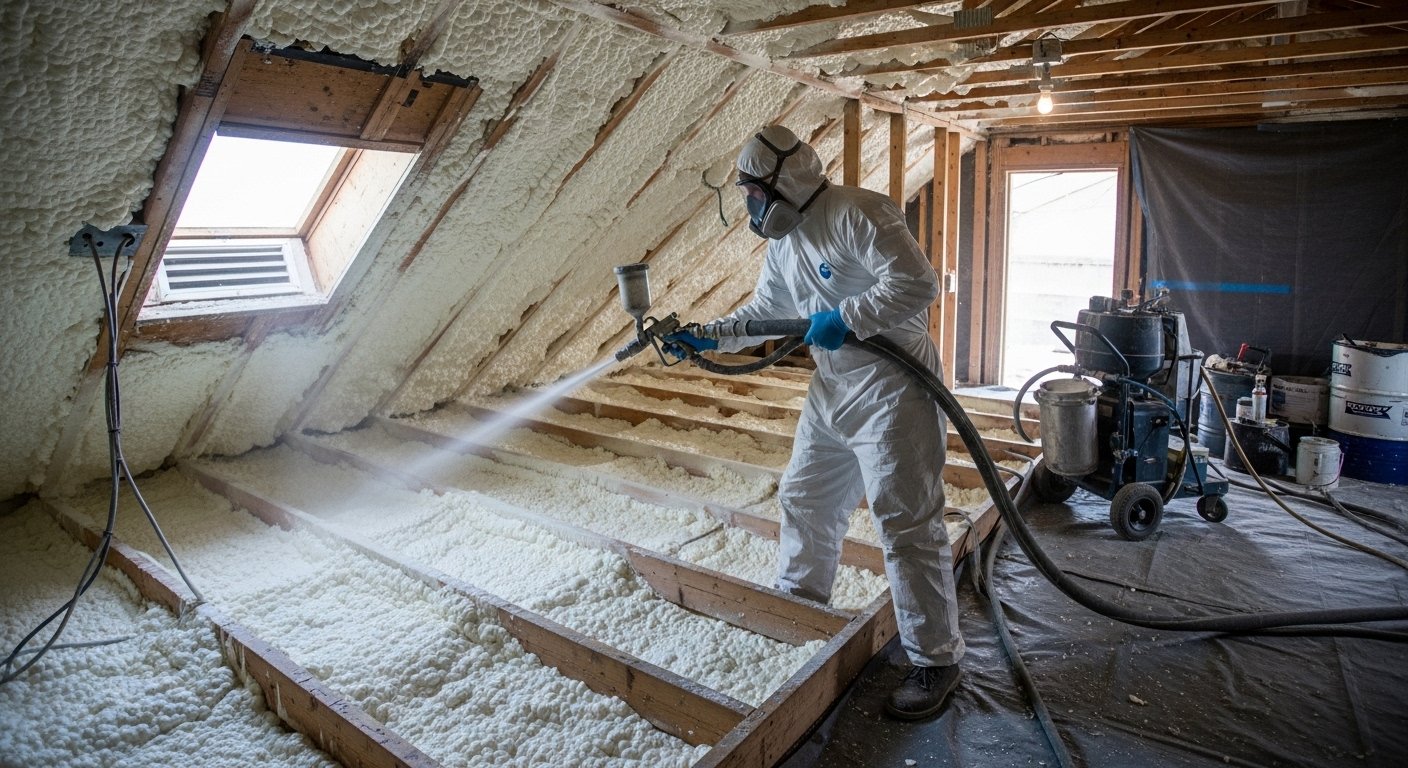
Fast self-check: does this sound like your home?
- You need more insulation value in a thin cavity
- A roof deck assembly needs added rigidity and air control
- Rim joists are drafty and hard to seal
- You’re insulating a garage ceiling or bonus room floor
- You want better moisture behavior than fiberglass in tricky locations
- You’re targeting a tighter building envelope before HVAC upgrades
What we do
We keep the scope practical—built around comfort and measurable waste reduction.
- Confirm where closed-cell is truly the right tool (not overkill).
- Plan thickness to meet targets without creating clearance issues.
- Focus on edges and transitions—rim joists, plates, penetrations—where performance is won or lost.
- Coordinate ignition/thermal barrier requirements when applicable.
- Document the scope so you can coordinate with drywall/finish trades cleanly.
Our process
- 1. Site assessment and assembly review (roof deck, rim joist, walls, or subfloor).
- 2. Plan for ventilation and curing, plus protection for finished surfaces.
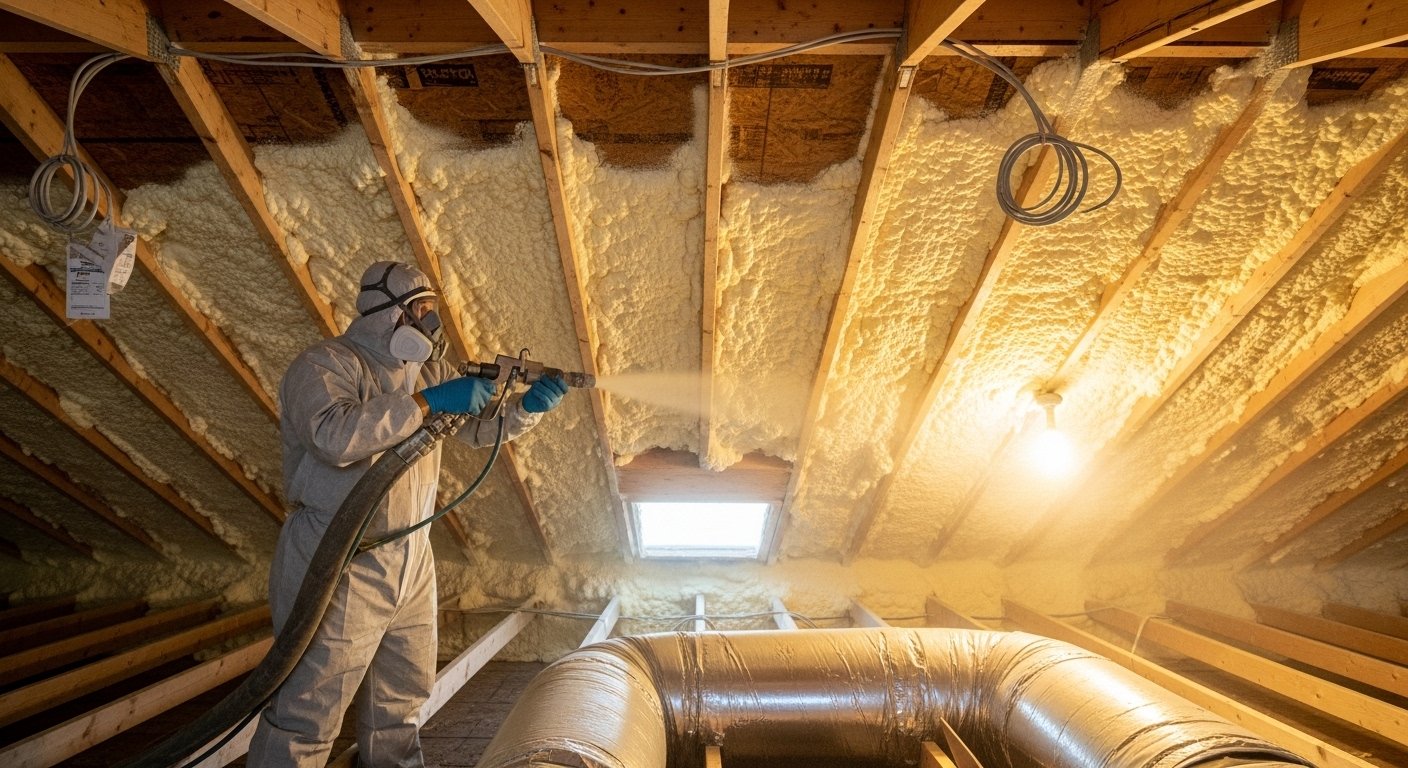
- 3. Install closed-cell in controlled passes for consistent density and adhesion.
- 4. Trim and detail work at access points, hatches, and mechanical penetrations.
- 5. Final walk-through with recommended next upgrades (duct sealing, attic strategy, etc.).
Pricing factors
Most insulation quotes differ because the scope and access differ. These are the main variables we price around:
- Project area and thickness target.
- Access constraints (tight crawl spaces, steep roof angles).
- Whether we’re addressing rim joists, roof deck, or multiple assemblies.
- Prep work: removal, masking, protecting finished areas.
- Code/assembly requirements (barriers, ventilation approach).
Why homeowners choose this upgrade
- Best option when you need maximum performance in limited depth.
- Strong air seal at rim joists—one of the biggest leak zones in raised-foundation homes.
- Useful for roof deck conversions when designed correctly.
- More resilient in damp-prone locations compared with some fibrous materials.
We’ll tell you when a lower-cost alternative will deliver the same comfort outcome.
Related services
If we find adjacent issues during inspection, these are the most common add-ons:
Helpful reading
Cost, comparisons, and decision guides—built for Arcadia-area homeowners.
Service areas
Based in Arcadia, we also serve nearby cities including Pasadena, San Marino, La Cañada Flintridge, South Pasadena, Sierra Madre and more.
FAQs
Is closed-cell better than open-cell spray foam?
It depends. Closed-cell has higher R-value per inch and is more moisture resistant, while open-cell can be a good fit for certain roof assemblies and sound control.
Can closed-cell be used under a floor?
Yes—especially for drafts and comfort issues above crawl spaces or overhangs.
Do you spray closed-cell on roof decks in California?
Yes, when the assembly design supports it. We evaluate ventilation, duct location, and moisture risk before recommending it.
Does closed-cell spray foam qualify for rebates?
Sometimes, but programs vary. We can point you to what to verify and what documentation is typically needed.
Will closed-cell stop attic heat?
It reduces heat transfer and air leakage, but radiant load and duct leakage also matter. Often the best results come from a full attic strategy.
Is it safe around wiring?
We follow clearance and safety requirements. If electrical upgrades are needed first, we’ll flag it.
How long does closed-cell last?
When applied correctly, it’s a long-life material. The key is proper surface prep and assembly design.
Can you combine closed-cell with other insulation?
Yes—hybrid approaches can be cost-effective, such as closed-cell for air sealing plus additional insulation for total R-value.