Spray Foam vs Fiberglass in a Hot Climate: Which Makes Sense for Arcadia Homes?
A decision guide comparing spray foam and fiberglass for Southern California comfort problems, attic assemblies, and cost priorities.
Spray Foam vs Fiberglass in a Hot Climate: Which Makes Sense for Arcadia Homes?
In a hot climate, comfort problems usually come from two sources: attic heat gain and air leakage. Insulation type matters, but the bigger question is what problem you’re solving.
This guide compares spray foam and fiberglass in practical terms—performance, cost drivers, and which situations in Arcadia tend to favor one over the other.
How they behave in real homes
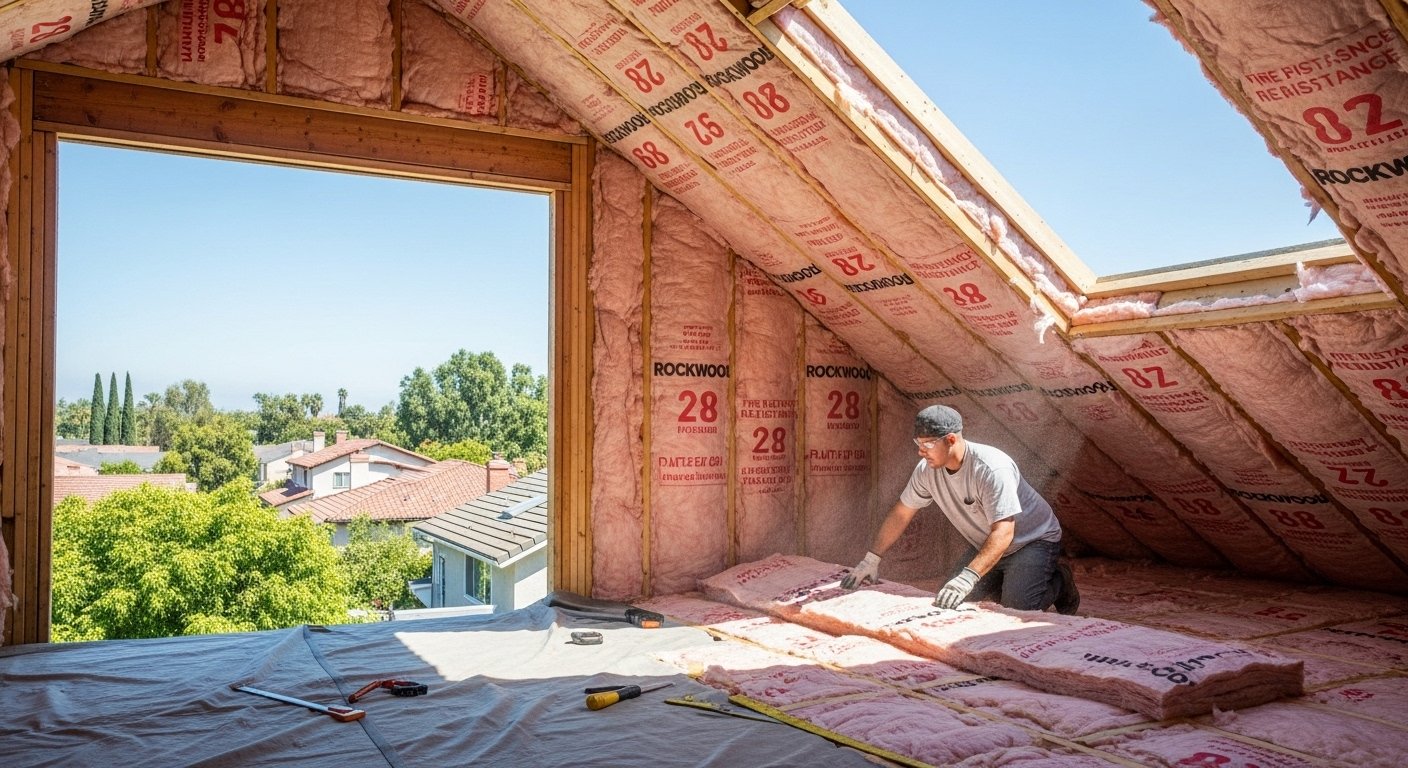
- Fiberglass: great at slowing heat transfer when installed with full coverage and proper air control. It does not stop air leaks by itself.
- Spray foam: insulation + air sealing in one material, especially helpful at leaky transitions and complex roof lines.
When fiberglass is the better value
- You have a conventional attic with good access.
- The main issue is low or uneven insulation depth.
- Air sealing can be done effectively at the ceiling plane.
- You want a strong ROI without changing how the attic functions.
When spray foam is the smarter call
- Air leakage is driving discomfort (drafts, dust, attic odor).
- You have vaulted ceilings, complex roof lines, or hard-to-seal cavities.
- You’re converting an attic or insulating a roof deck assembly.
- Rim joists and tricky transitions need durable sealing.
Cost reality: what moves the quote
Spray foam costs rise quickly with thickness and prep. Fiberglass projects can get expensive when removal is required or when the scope includes meaningful air sealing and duct repairs (which is often the right approach).
Compare bids based on outcomes: will the scope actually reduce heat gain and leakage, or just add material?
The winning combo for many Arcadia homes
Many homeowners get the best results from a hybrid approach: air seal the attic properly, seal ducts, then use a cost-effective insulation layer for total R-value—adding targeted spray foam only where it provides unique value.
That strategy controls cost while still addressing the real problem: leakage + heat gain.
Next steps
If you tell us what your home is doing—hot rooms, high bills, dusty registers—we can recommend the most practical insulation path.
Call or text Arcadia Insulation Co. for a scope that explains tradeoffs clearly.
Related services
If you’re ready to act on this guide, these are the most relevant services to start with:
Have a question about your home?
Call or text with your city and a couple photos (attic access, insulation depth, ducts). We’ll tell you the most practical next step.
FAQs
Which is better for a hot attic?
It depends. If air leaks are the problem, foam can help. If you mainly need more insulation depth, fiberglass with proper air sealing can be the better value.
Will fiberglass lower my electric bill?
It can, especially when combined with air sealing and duct sealing. Insulation alone won’t fix major leaks.
Does spray foam replace the need for air sealing?
Foam provides air control where installed, but other leaks (hatches, duct boots, chases) still need attention.
Is foam always needed for roof decks?
Not always, but roof deck assemblies require careful design. We evaluate the safest and most practical approach.
Can I mix materials?
Yes—hybrid scopes are common and often the best ROI.