
Spray Foam Insulation Cost in Arcadia, CA: What Actually Changes the Price
A practical cost guide for spray foam in Arcadia—open-cell vs closed-cell, attic vs roof deck, and what drives real pricing differences.
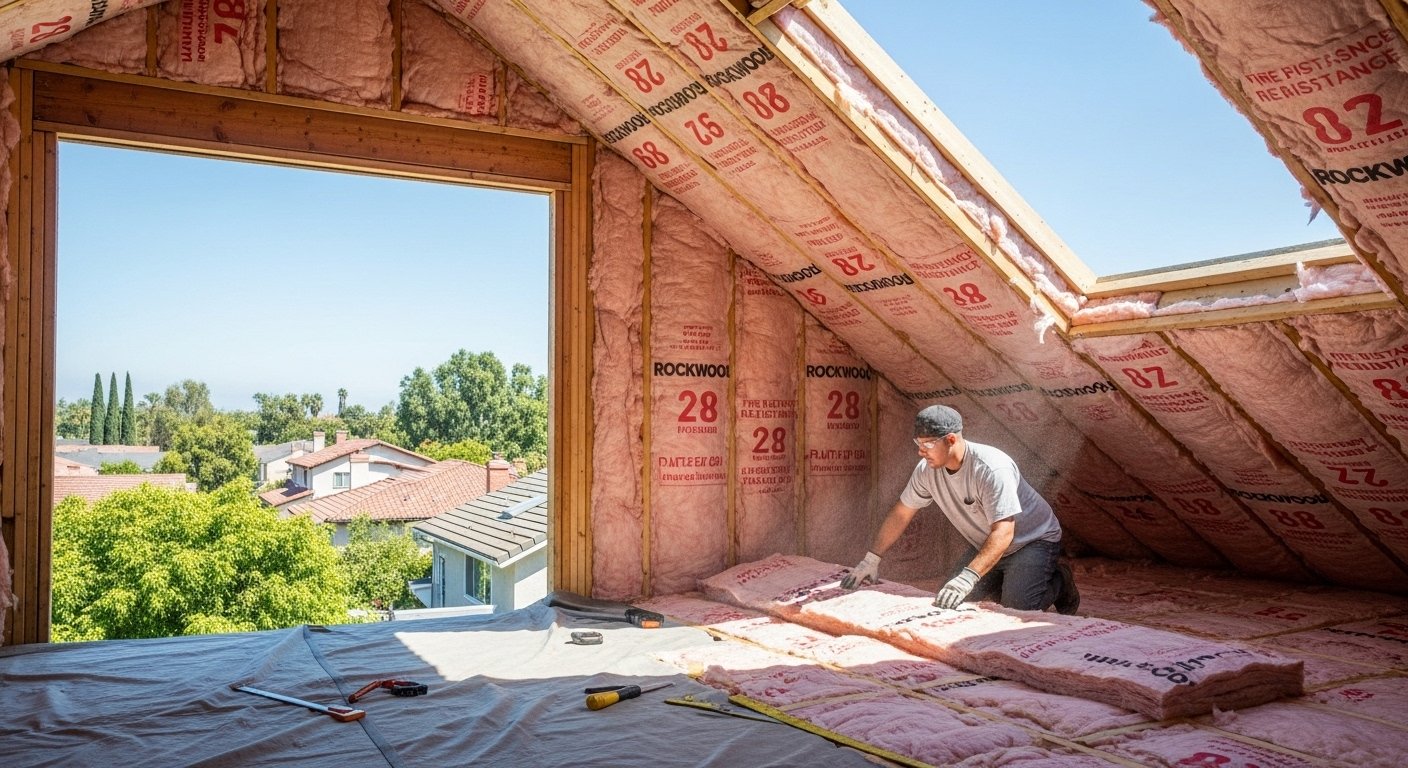
Spray Foam Insulation Cost in Arcadia, CA: What Actually Changes the Price
Spray foam pricing is rarely a simple “price per square foot.” Two Arcadia homes with the same attic size can land in different ranges because the assembly, access, and foam type change labor and material dramatically.
This guide explains the variables that move the quote up or down so you can compare bids and choose the right scope (without paying for foam where it doesn’t add value).
Typical cost range: why quotes vary so much
Most homeowners see the widest variation when comparing open-cell and closed-cell foam, and when a project moves from a flat attic ceiling to a roof deck. Those are not equivalent jobs: roof deck work changes prep, thickness targets, and how the attic behaves as a space.
Instead of trusting a single number, ask a contractor to explain which of the pricing drivers below is doing the heavy lifting in your estimate.
1) Open-cell vs. closed-cell (and why “better” isn’t always better)
Closed-cell typically costs more because it uses more material per inch and delivers higher R-value per inch. It’s a strong fit for roof decks, rim joists, and tight cavities where you need maximum performance in limited depth.
Open-cell can be a good value for certain assemblies and sound control, but it isn’t a direct substitute for closed-cell in moisture-sensitive locations. The right decision depends on the assembly—not just the budget.
2) Where the foam is installed
- Attic floor / flat ceiling: Often the most straightforward area and commonly paired with attic air sealing.
- Attic roof deck: Turns the attic into conditioned space; details and prep matter more, so costs rise.
- Rim joists: Small area, high impact—often priced as a targeted project.
- Walls / vaulted ceilings: Access and finish protection can drive labor.
3) Thickness targets and code/assembly requirements
Foam thickness isn’t arbitrary. It’s set by the performance goal and the assembly constraints. If you’re trying to get “as much R-value as possible” into a shallow cavity, closed-cell may be required—but the cost climbs with each added inch.
Some projects also require an ignition or thermal barrier depending on the location and use of the space. That’s a legitimate cost item and should be spelled out clearly in the scope.
4) Access, prep, and protection
Many Arcadia attics have tight eaves, low clearance, or crowded mechanicals. Contractors price the reality of moving safely, protecting finishes, and achieving consistent coverage at the edges.
If your project includes finished living space below, masking and protection can be a meaningful part of the quote. A low bid that ignores prep is usually a headache later.
5) Removal: when old insulation has to go first
Spraying foam over contaminated or rodent-damaged insulation is a common mistake. If removal is needed, it’s not “extra fluff”—it’s what allows proper air sealing and a clean surface for long-term performance.
If you suspect contamination, price the job as a two-step: removal/cleanup first, then foam or another insulation strategy second.
How to compare spray foam bids (the 6 questions that matter)
- Which foam type are you proposing, and why does this assembly need it?
- What thickness are you installing, and how will it be verified?
- Are you addressing air leaks first (top plates, chases, hatches), or only insulating?
- Is duct sealing included if ducts are in the attic?
- What curing/ventilation guidance do you provide for occupancy?
- What’s excluded (removal, barriers, access repairs) that could become a change order?
When spray foam is the best ROI
Spray foam is usually the best value when air leakage is a major driver of discomfort—hot upstairs rooms, dusty attic air, and long A/C cycles. It’s also excellent in targeted locations like rim joists and tricky transitions where fibrous insulation struggles to seal.
If the home simply needs more insulation depth and the air leaks are manageable, an attic air-seal + blown insulation strategy can deliver similar comfort at a lower cost.
Next steps
If you want a spray foam quote that’s comparable from contractor to contractor, request a written scope that states foam type, target thickness, locations, and whether air/duct sealing is included.
Call or text us for a walkthrough-style estimate that explains options clearly.
Related services
If you’re ready to act on this guide, these are the most relevant services to start with:
Have a question about your home?
Call or text with your city and a couple photos (attic access, insulation depth, ducts). We’ll tell you the most practical next step.
FAQs
What affects spray foam cost the most?
Foam type (open vs. closed cell), installation location (attic floor vs. roof deck), and access/prep usually drive the biggest swings.
Is closed-cell always worth the extra cost?
Not always. Closed-cell is best when you need higher R-value per inch, added rigidity, or moisture resistance in a demanding assembly.
Does removal add a lot to the price?
It can, but removal is often necessary when insulation is contaminated or blocking proper air sealing—skipping it can ruin performance.
Can I get a price per square foot?
Only if the quote specifies foam type, thickness, and location. Otherwise comparisons are misleading.
Do you offer both call and text estimates?
Yes—call or text and we’ll schedule the right next step for your project.